Enterprise AI has an extensibility problem. That changes now.



Every enterprise AI practice is different, and the prevailing approach to platform extensibility has been reactive. This includes waiting on release cycles, filing tickets, and building outside the platform. I've spent years watching the same pattern play out across data science teams. The platform is strong, but inevitably a team needs something specific to their context: a way to automate model documentation for a regulatory filing, a process tailored to clinical trial data structures, or a more efficient path through AutoML that doesn't require switching between tools. At that point, teams tend to face one of two outcomes, either waiting for engineering to prioritize the work, or building something informal that lives outside rather than inside the platform.
That tension isn't unique to any one organization. It doesn’t necessarily represent platform quality but it is a structural challenge inherent to building general-purpose enterprise software, and it requires a deliberate architectural response.
Domino Extensions are purpose-built capabilities that embed directly into the platform, enabling data science teams to customize and extend their AI practices without sacrificing the auditability and traceability that regulated enterprises require. The Extensions framework gives teams the flexibility to shape the platform around their specific needs while staying within a single system of record. This post explains why that architectural decision matters and what it means in practice.
How to Turn Platform Breadth into Precision
Enterprise AI platforms are built for breadth. They must serve regulated industries, diverse teams, and highly varied operational demands within a single deployment. That breadth is a genuine strength. It's what qualifies a platform as enterprise-grade in the first place. But the more general a platform is designed to be, the more difficult it becomes for any individual team to feel that it was built specifically for their work.
Domino's governance model, audit trail, and reproducibility guarantees are only as strong as the work that operate within them. When teams build outside the platform, they voluntarily step outside that foundation. That means it is outside the governance model and its audit trail, and is not reproducible. The flexibility is real, but it comes at a cost that tends to be underestimated, until it isn't. It is the invisible debt they accumulate. This includes costs such as undocumented logic, ungoverned decisions, and work that cannot be traced or audited when the moment demands it. For organizations operating under GxP, SOC 2, or model risk management frameworks, it surfaces in audits, in validation cycles, and in the gap between what a model does and what can be proven about how it was built. In regulated industries, that debt has material consequences.
What Makes Domino Extensions Different
Domino Extensions are designed for data science professionals and AI builders who are the people primarily doing the work of building models. They embed directly into the Domino UI, operate with awareness of your project context, and are governed by the same mechanisms that govern everything else in the platform.
That last point is worth emphasizing. Extensions surface inside project sidebars, model and dataset views, file menus, and admin navigation. They are aware of who you are, what project you are working on, and what data is relevant to your current task. There is no context-switching, no duplication of effort, and no re-entering information the platform already holds.
Extensions also inherit everything Domino already provides: governance, auditability, and reproducibility. That inheritance is not incidental. It means every Extension, whether built by Domino, a partner, or your own team, operates within the same system of record. There is no separate governance layer to configure, no additional compliance review required, and no question about whether a custom capability meets the same standard as the rest of the platform. The result is the flexibility of a custom-built tool combined with the integrity of a platform-native experience. Based on what I've seen in the market, that combination is genuinely differentiated.
Three Signs Your Team Should Build a Domino Extension
Not every operational friction point warrants a custom Extension, but some patterns appear with enough regularity that they are worth naming directly. If your team recognizes any of the following, a Domino Extension is likely the right solution for the problem.
- Your team has built something that lives outside the platform. Internal scripts, side tools, and informal processes that exist outside Domino represent ungoverned work. If the logic that matters to your regulatory filing or model documentation lives in a spreadsheet or a shared drive folder, the platform is not fully serving the team.
- You are waiting on engineering to implement a change to improve functionality your team needs now. General-purpose platforms cannot anticipate every domain-specific requirement. If recurring, high-friction tasks require filing tickets and waiting on release cycles, the team is absorbing costs in the form of lost time and deferred quality.
- Your processes require context that only the platform holds. Project metadata, dataset lineage, user identity, and model artifacts are all things Domino already knows. If a tool your team uses requires re-entering or duplicating that information, the architecture is working against you. Extensions eliminate that redundancy by operating with full awareness of platform context.
Domino's governance model is only as complete as the work that runs within it. Extensions close that perimeter.
The First Domino Official Extensions
Enterprise teams should be able to rely on a platform that grows with their needs. Domino's commitment to the Extensions framework reflects that principle. The Official Extensions catalog will expand with each release, and the framework itself will continue to mature, giving teams increasing confidence that the capabilities they need will either exist or be within reach to build.
To that end, Domino is launching three Extensions in the Summer of 2026, each targeting a recurring, high-friction problem for data science and builder teams.
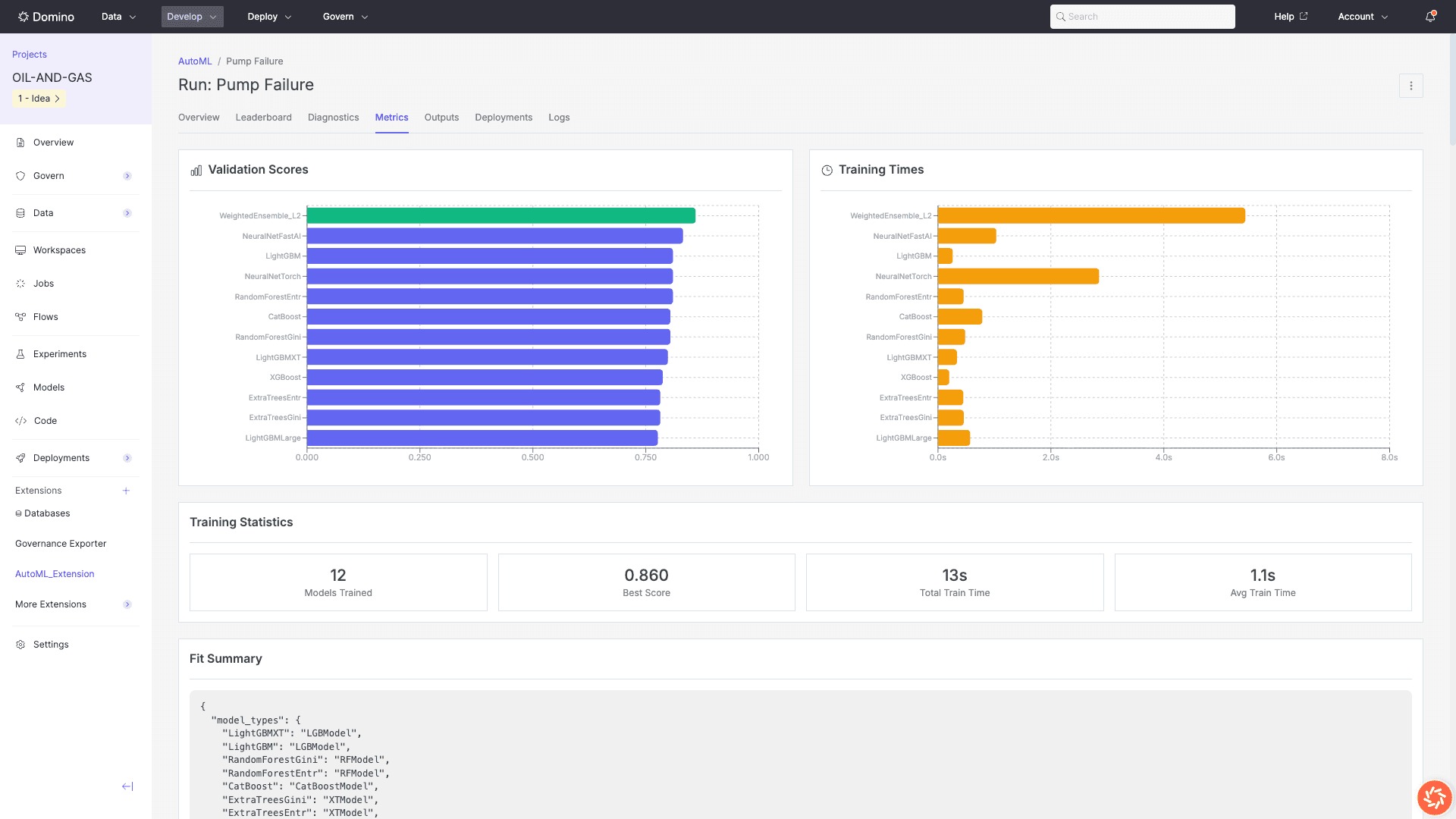
- AutoML Studio enables teams to run AutoML experiments natively, comparing models without leaving project context. This extension provides the ability to explore data as well as build, validate and deploy models without the requirement of using code.
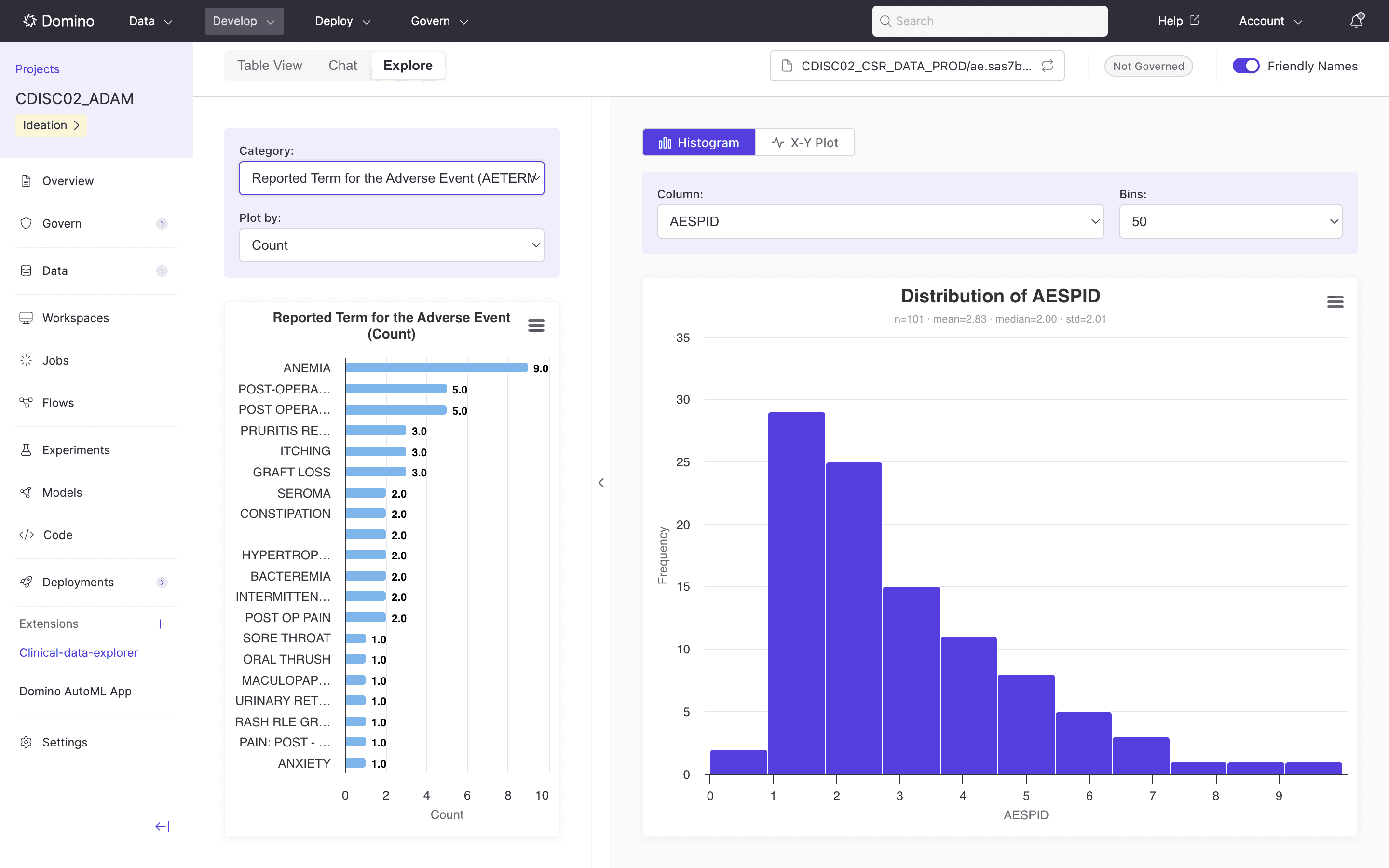
- Clinical Data Explorer is purpose-built for life sciences teams, enabling exploration and validation of clinical datasets inside the platform. Beyond the needs of clinical programmers, this extension also serves as an example of how an extension deeply integrates with Domino and can further be developed or modified for different needs. Extensions are flexible and will allow you to adapt the platform to suit business needs.
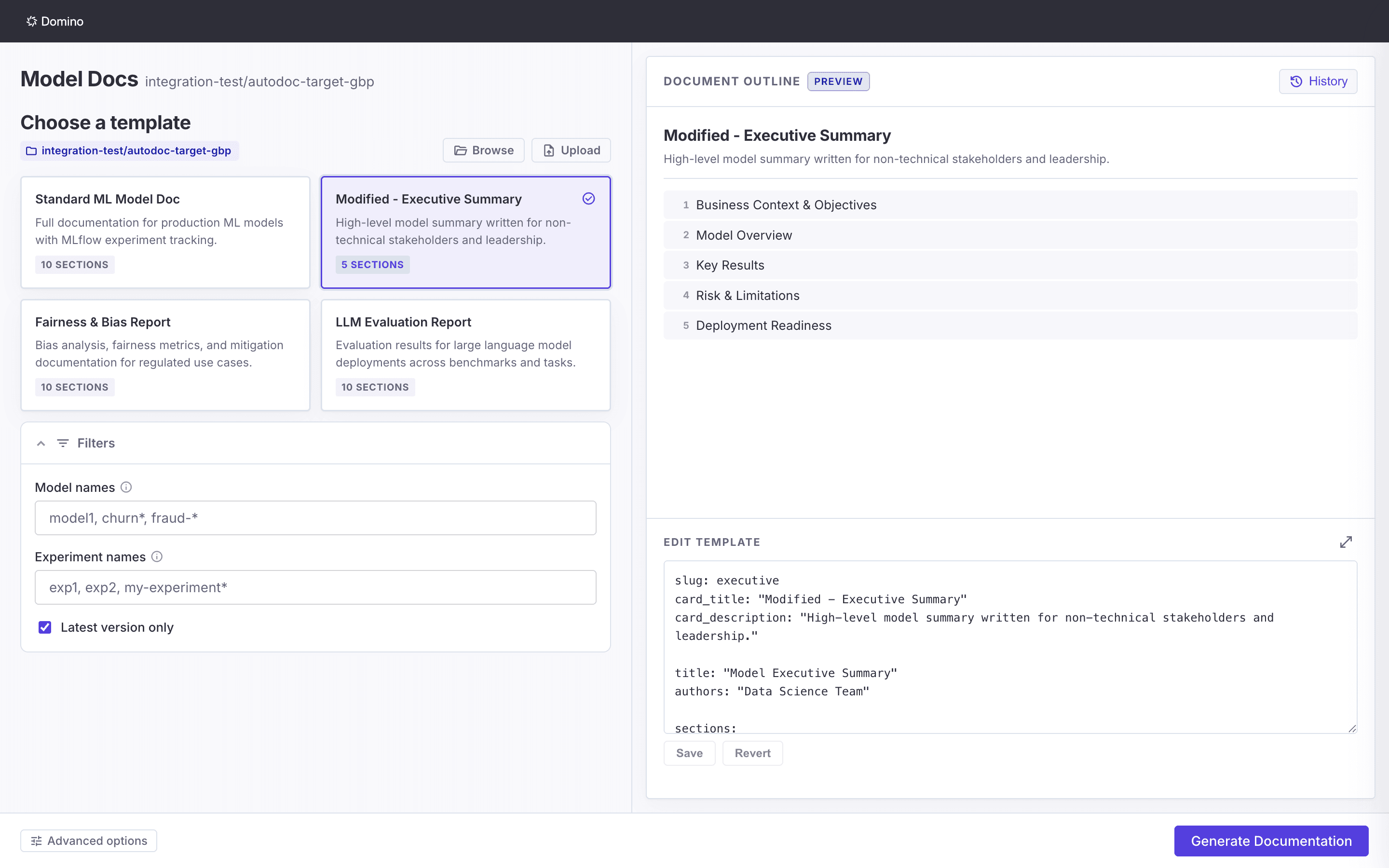
- Model Docs analyzes source code and MLflow artifacts, then uses LLMs to generate professional, citation-backed documentation in minutes rather than hours or days.
These three extensions are a starting point. Each one was chosen to demonstrate a different dimension of what the framework makes possible. The intent is to establish a pattern that teams can build on, not to define the limits of what Extensions can do.
What this means for AI leaders
The relevant question is what your team would build given the ability to extend the platform in a governed, auditable way. The answer to that question tends to point directly at the highest-friction activities. Those are the Extension candidates. And the framework to build them now exists, with the governance guarantees that regulated enterprises require. The best AI platforms are the ones that make it possible for your organization to shape them around work, without sacrificing the foundation that makes the platform worth using in the first place. For organizations in regulated industries, the governance guarantees are not a secondary consideration. They are the reason Extensions are architected the way they are. Every capability built on the framework inherits Domino's system of record by design, which means extensibility and compliance are not competing priorities.
Ready to extend your platform?
Domino Extensions give every team a governed, auditable path to shape the platform around their work. Browse the Extensions documentation to see what the framework makes possible, or reach out to our team to walk through your specific use case.