Modernizing science with SSH: Local tools, global compute, reproducible results



Scientific computing in life sciences is evolving quickly. From simulating dose-response relationships to analyzing high-dimensional genomics data, researchers rely on sophisticated tools to accelerate discovery and development. But as R&D grows more complex, data science teams need more than just power. They need flexibility, reproducibility, and collaboration.
That’s often easier said than done. Many scientists prefer to work in desktop environments like VS Code, RStudio, and Positron, but struggle to connect those tools to centralized data and scalable infrastructure. Inconsistent environments and clunky deployments can also make it hard to share work efficiently across teams.
At Domino, we’re removing those barriers and making it easier for life sciences teams to use the tools they know and love, without sacrificing performance or reproducibility.
Domino's SSH access is a critical feature that allows data science teams in clinical research to securely connect their preferred local tools directly to a cloud-hosted infrastructure. This capability bridges the gap between personal desktop setups and enterprise-level compute, enabling researchers to run intensive jobs on powerful remote machines while coding in their familiar environment.
How SSH access enables reproducible data science
Scientific work is rarely confined to a browser. While Domino offers built-in access to tools like RStudio and Jupyter, many researchers have workflows deeply integrated into local tools, complete with their own extensions, shortcuts, and interface preferences.
With SSH access, you can securely connect your local desktop tools to Domino’s scalable infrastructure. It’s the best of both worlds: the flexibility of local tools with the reproducibility and power of enterprise infrastructure.
SSH access is especially useful for scientists in translational research, computational biology, and clinical modeling who rely on high-performance, highly personalized workflows.
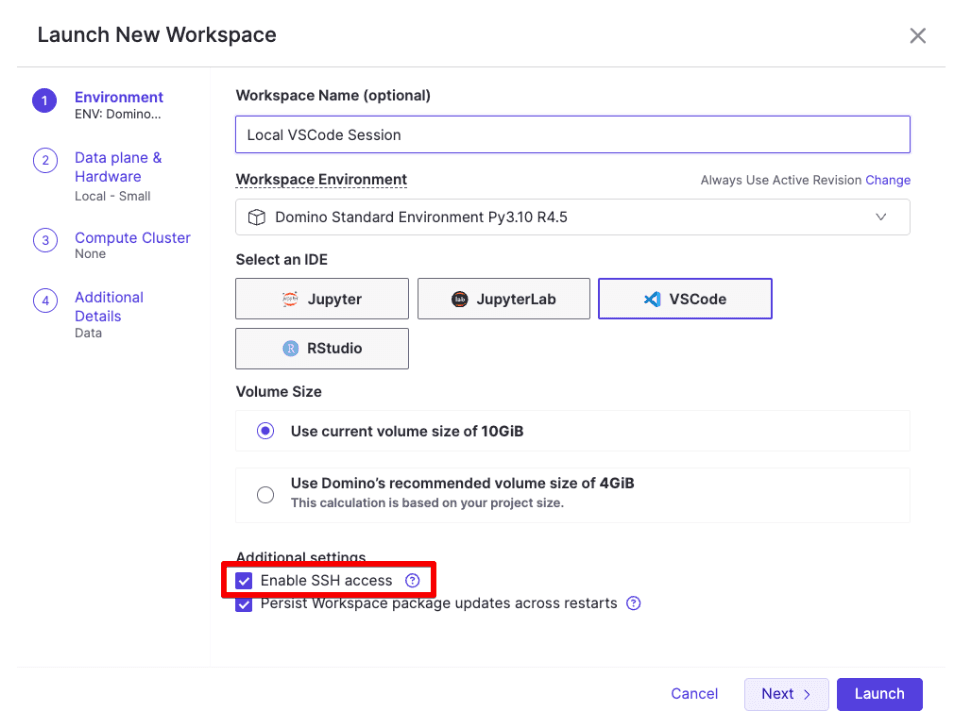
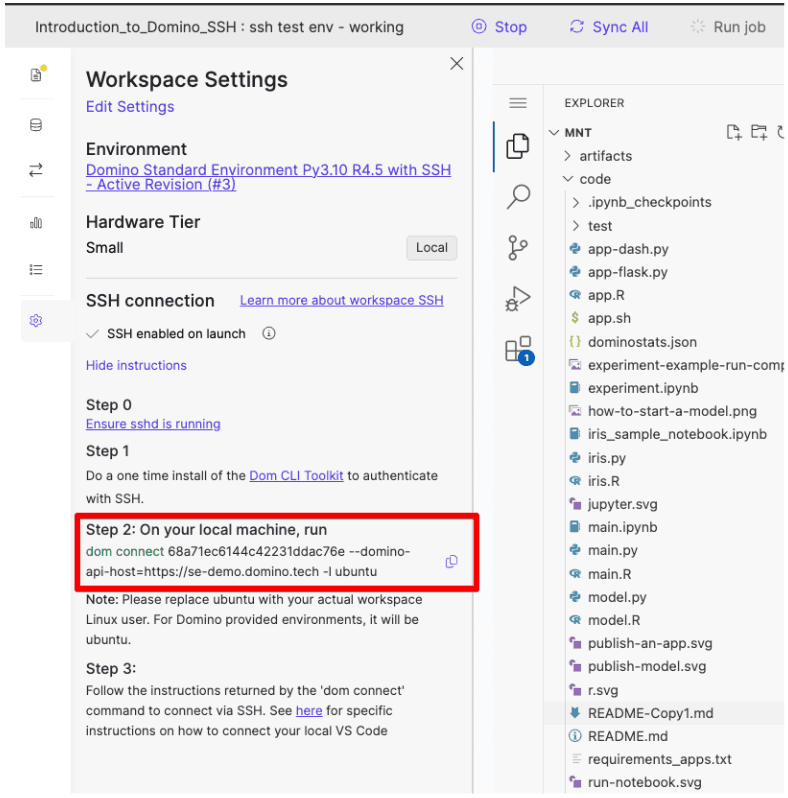
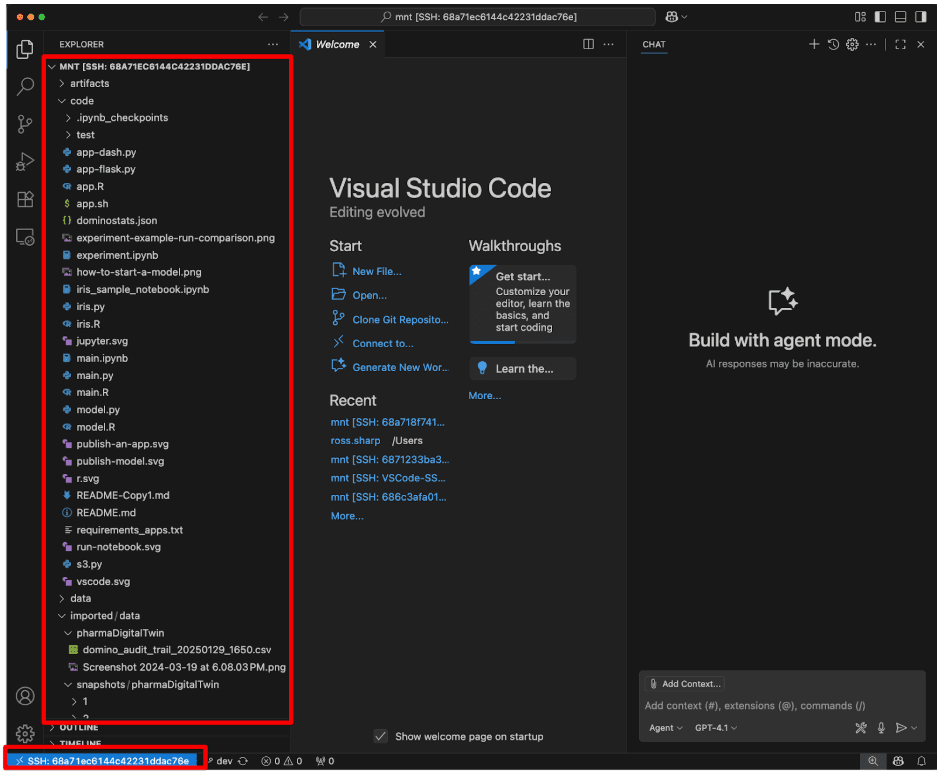
Using your IDE of choice: From VS Code to Positron
Domino gives data scientists flexible access to Positron, the modern IDE from Posit that supports both R and Python workflows.
- In Domino: Launch Positron directly in your workspace and get instant, browser-based access to a managed development environment with no setup required.
- On your desktop via SSH: Use your locally installed Positron to connect to Domino’s infrastructure, keeping your custom environment while benefiting from centralized compute and data.
Domino supports both local and in-platform access to Positron, so you can develop wherever you're most productive.
Scaling insights and collaboration in clinical research
Once the science is done, sharing results is just as important. With Domino, it’s easy to publish interactive apps that run inside a governed, secure environment.
Build with your preferred framework - Create apps using Shiny, Dash, or Streamlit, no infrastructure setup required.
Empower cross-functional teams - Share tools like:
- A biomarker explorer for translational scientists
- Enrollment predictor for clinical operations teams
Maintain traceability and reproducibility - Apps are deployed in Domino’s governed environment, so there’s no tradeoff between flexibility and compliance.
Domino Apps scale insights from individual contributors to the entire organization without bottlenecks or engineering handoffs.
Building a more flexible future for life sciences R&D
Domino’s vision is to be the enterprise data science platform for R&D — one that meets scientists where they are and helps them move faster with less friction. Domino removes friction across the entire scientific computing workflow:
- Flexible development: Use your favorite local tools via SSH.
- Modern IDE access: Launch popular IDEs like VS Code, RStudio, or Positron in the cloud or run it locally.
- Frictionless sharing: Publish interactive apps for real-time collaboration.
Whether you're running simulations, visualizing large-scale omics data, or building applications for cross-functional teams, Domino gives you the infrastructure to scale and the freedom to work the way you want.