
Domino and VMware: Enterprise AI
Together, Domino and VMware deliver robust AI-ready infrastructure and multi-cloud management with full model lifecycle capabilities that accelerate AI innovation at scale.
Enterprise-Ready AI
Domino provides Enterprise MLOps capabilities to build, deploy, and monitor models at scale. Any model, any data, any cluster - in data centers, the hybrid/multi-cloud, or at the edge.
With Domino and VMware Cloud Foundation or vSphere with Tanzu, IT can utilize consistent infrastructure and cloud operating models for AI workloads using tools they already know and love.

Run AI Workloads Anywhere
Run workloads on the most efficient infrastructure, on-prem or cloud
Never run out of compute capacity
Improve data access and software supply chain security

Production-Grade Resiliency and Reproducibility
Align AI workloads with standard IT infrastructure and cloud operating models
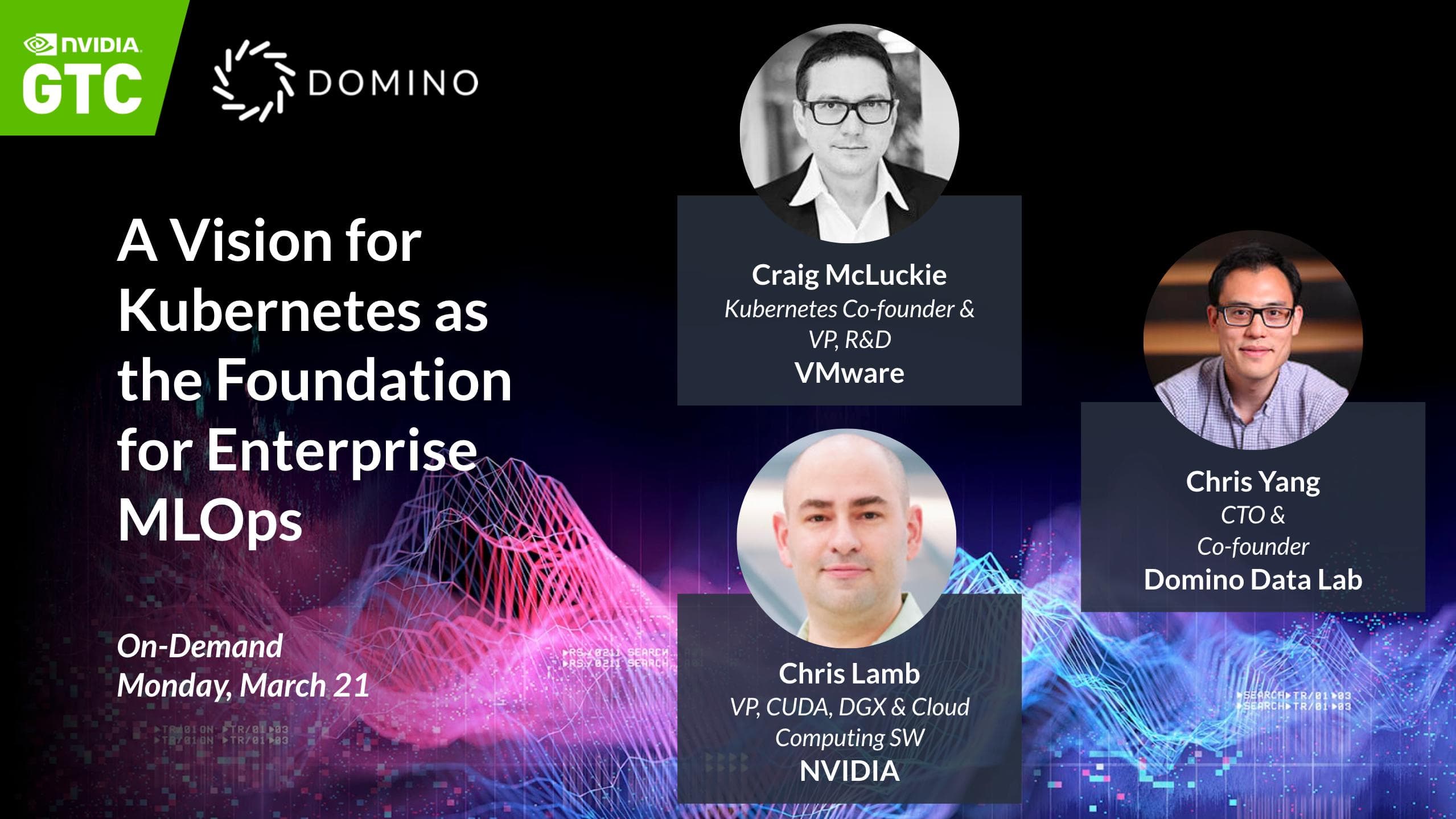
Is Kubernetes the foundation for enterprise MLOps?
In this on-demand panel, innovators from NVIDIA and VMware discuss the history of Kubernetes and it's rising prominence in GPU-accelerated data science. Featuring Craig McLuckie (K8s Co-founder & VP of R&D at VMware), Chris Lamb (VP, CUDA, DGX & Cloud Computing at NVIDIA), and Chris Yang (Domino CTO).


Domino’s growing partner ecosystem helps our customers accelerate the development and delivery of models with key capabilities of infrastructure automation, seamless collaboration, and automated reproducibility. This greatly increases the productivity of data scientists and removes bottlenecks in the data science lifecycle.

